
%20(1).png)
Whether on a construction site, in a port, or during large-scale assembly work, cranes are an essential part of day-to-day commercial operations. Anyone looking to buy, rent, or finance one quickly faces a complex decision: the price range is enormous and the differences between crane types are significant. This article gives you a clear overview of purchase prices, rental costs, and financing options so you can make the right call for your business.
What Types of Cranes Are There?
A crane is not just a crane. Depending on the application, load capacity, and mobility, there are considerable differences between types and that goes for costs too.
Anyone looking to buy, rent, or finance a crane should first understand which type fits their operation. As with other construction machinery, the right choice depends less on price and more on the specific use case. You should be able to distinguish between the following crane types to make a solid purchasing decision.
Mobile Crane
The mobile crane is the most flexible solution for construction and trade businesses. It drives independently on public roads, is quick to deploy, and requires no complex assembly. Mobile cranes are used wherever flexibility is key: construction sites, assembly work, heavy transport. Load capacity ranges from a few tonnes for compact truck-mounted cranes to several hundred tonnes for large telescopic cranes. This makes the mobile crane the most purchased and most rented crane type among German SMEs.
Tower Crane
The tower crane is the classic fixture on any major construction site. It is permanently installed, has a high load capacity, and is particularly suited for high-rise construction and larger infrastructure projects. The downside: setup and dismantling are time-consuming and expensive. For businesses working on a single site long-term it makes economic sense - for short-term deployments, less so.
Bridge Crane and Gantry Crane
Bridge cranes and gantry cranes are stationary systems installed permanently in a hall or on an open site. They are primarily used in industry, production facilities, shipyards, and logistics centers. Anyone who regularly needs to move heavy loads within a fixed area will struggle to find a better solution. The investment is high, but pays off quickly under intensive use.
Telescopic Handler and Trailer-Mounted Cranes
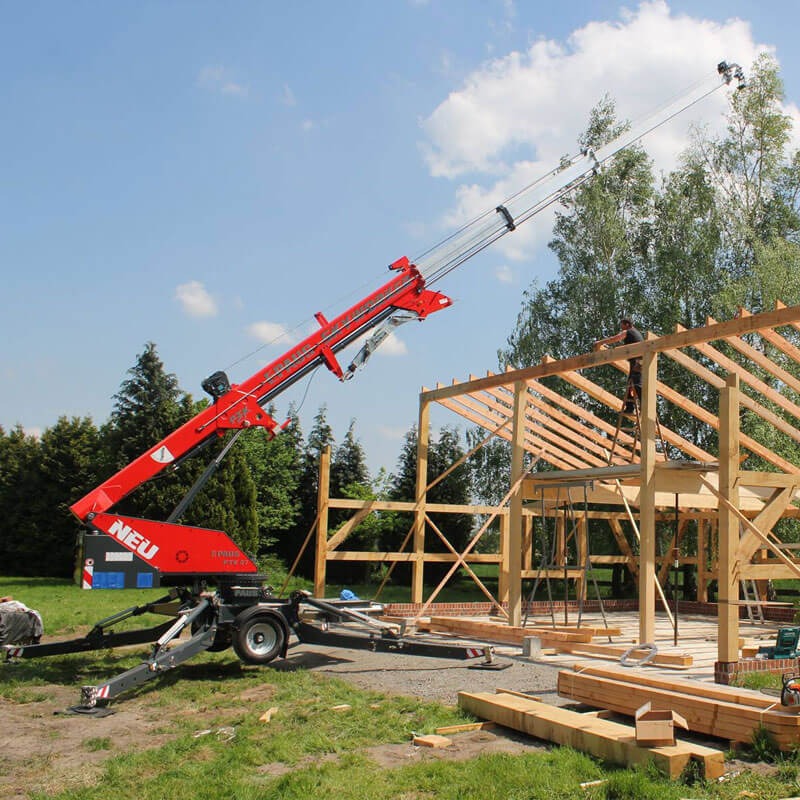
Strictly speaking, telescopic handlers are not cranes, but they are often mentioned in the same breath because they perform similar tasks: lifting, transporting, and positioning on construction sites. They are cheaper than mobile cranes, more versatile than tower cranes, and particularly common in landscaping and the trades. Trailer-mounted cranes are a cost-effective alternative for businesses that occasionally need to lift without wanting to operate a full crane.
Crane Manufacturere Compared
The market is dominated by a handful of large manufacturers that differ significantly in price, quality, and service networks.
- Liebherr is the best-known German manufacturer and sets the quality benchmark for mobile and tower cranes. High upfront costs, but a strong service network and high resale value.
- Tadano has grown in relevance following its acquisition of Demag and offers a broad range of truck-mounted and mobile cranes in the mid-to-upper price segment. Well represented across Germany.
- Grove, part of Manitowoc, is particularly well-known in the mid-range mobile crane segment and offers solid value for businesses that don't need the top-of-the-line model.
- Potain, also Manitowoc, is the leading name for tower cranes in Europe and features on many large-scale construction projects.
- XCMG and Sany are Chinese manufacturers with a growing presence in the German market. Purchase prices are considerably lower than those of European manufacturers, though service networks and spare parts availability are not yet at the same level. For businesses under budget pressure with in-house maintenance capability, they're worth evaluating.
- Konecranes, Demag, and Stahl CraneSystem are the relevant names for bridge and gantry cranes; for telescopic handlers, Manitou, JCB, and Merlo dominate the market.
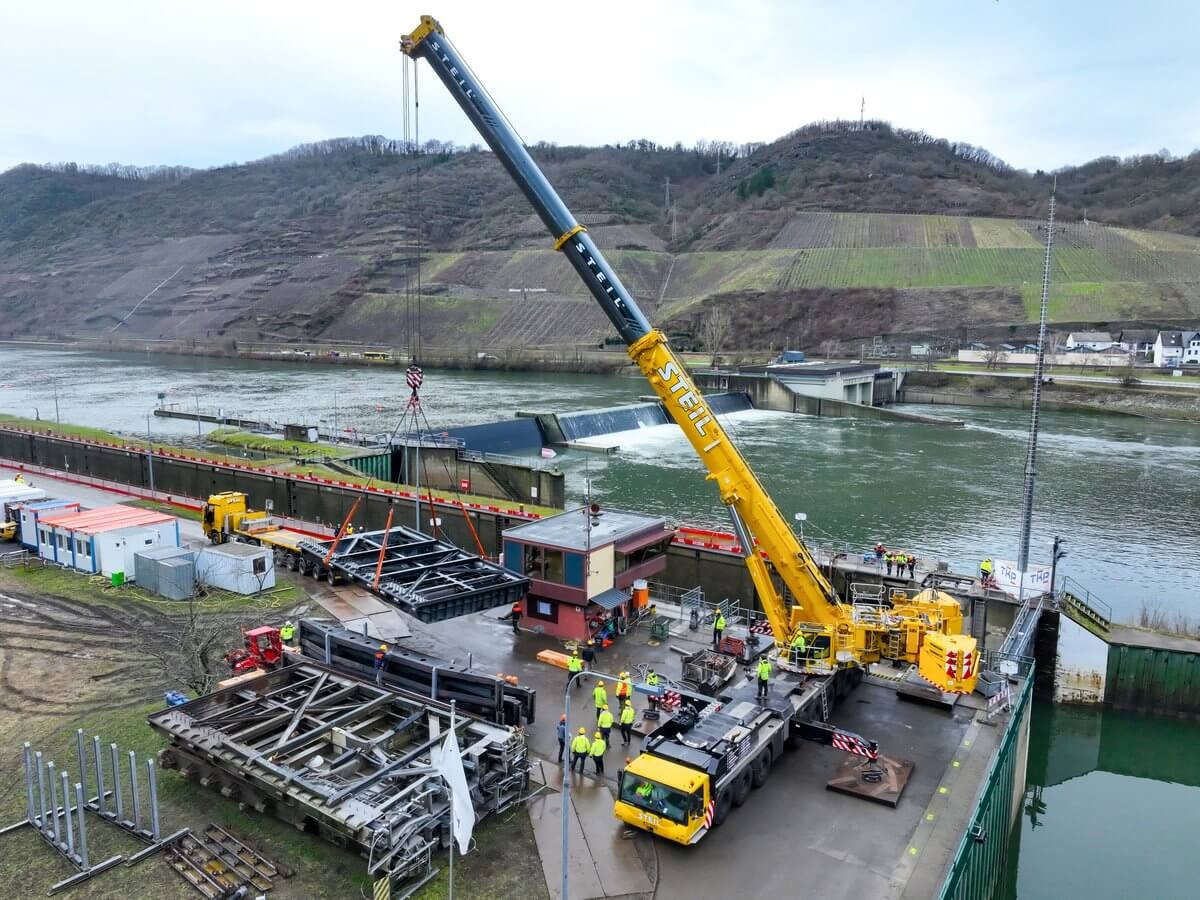
Crane prices vary considerably depending on model and manufacturer, but here's a rough overview.
What Does a Crane Cost?
Anyone buying or renting a crane for the first time is often surprised by the price range. A compact telescopic handler costs a fraction of a large mobile crane, and rental costs vary considerably depending on type, load capacity, and duration.
1.) What does a mobile crane cost?
A new mobile crane in the smaller segment - up to around 50 tonnes load capacity - starts at around €150,000. Larger models from 100 tonnes upwards quickly reach €500,000 and beyond; specialist heavy-lift equipment sits considerably higher. Used mobile cranes are available from around €50,000, though maintenance history and inspection status should be checked carefully.
2.) What does a tower crane cost?
New tower cranes start at around €200,000 depending on boom length and load capacity, but large models can run well into seven figures. Add to that significant assembly and dismantling costs, which can range from €5,000 to €30,000 depending on model and location. An investment of this scale ties up considerable liquidity and needs careful planning.
3.) What does a bridge crane cost?
Bridge cranes for industrial use start at around €80,000 for basic systems, but can quickly reach €300,000 and more with high load capacity and special configurations. Since they are permanently installed, foundation and installation costs come on top. Bridge cranes are rarely rented, as installation is not worthwhile for short-term use.
4.) What does a telescopic handler cost?
Telescopic handlers are the most affordable entry point for businesses that need to lift occasionally. New models start at around €40,000; well-equipped variants range between €80,000 and €150,000. Rental rates are comparatively low, making telescopic handlers particularly attractive for seasonal businesses and trades with fluctuating needs.
5.) What does a trailer-mounted crane cost?
Trailer-mounted cranes are a compact and affordable solution for smaller lifting jobs. New models start at around €20,000 to €30,000; higher-capacity variants range between €40,000 and €80,000. Used equipment is available from around €10,000, though condition and maintenance history are critical.
How Long Does a Crane Last?
Economic service life by crane type
Cranes are among the longest-lasting machines in commercial use, which makes them an investment that pays off over many years, provided maintenance is kept up. As a rough guide:
Mobile cranes last 20 to 30 years with regular servicing. Tower cranes reach similar lifespans but age more due to weather exposure. Bridge cranes are often in service even longer, 30 to 40 years is not unusual for stationary industrial systems. Telescopic handlers have a somewhat shorter economic lifespan of 10 to 15 years due to more intensive use and higher wear.
An important distinction: technical and economic lifespan are not the same thing. A crane can still be technically functional while being economically obsolete, when new safety regulations, stricter emissions standards, or changed load requirements make modernisation or replacement necessary.
Maintenance, Inspections, and Residual Value
Cranes in Germany are subject to strict inspection requirements. The annual UVV inspection under DGUV Regulation 52 is mandatory and must be carried out by an approved expert each year. Additional main inspections and, where applicable, load tests after major repairs or modifications are also required.
Maintenance costs typically run at around 1 to 3 percent of the new price per year, depending on crane type and age. Neglecting maintenance means not just safety risks but also a significant drop in resale value. Well-maintained cranes from established manufacturers like Liebherr or Tadano can still achieve 40 to 60 percent of their original price after 15 years - which makes the investment even more compelling.
For businesses where this level of investment feels too large or too long-term, renting remains a solid alternative.
Crane Rental Costs - An Overview:
Not every business needs a crane permanently. Anyone who only needs one for individual projects will often come out ahead by renting rather than buying. Particularly for businesses that want to protect their liquidity, renting is the lower-risk short-term option.
What does a crane cost per day?
The rental costs depend heavily on crane type and load capacity. As a rough guide for Germany, the following daily rates apply -excluding crane operator and travel costs:
- Mobile crane rental (up to 50 tonnes): €800 to €1,500 per day
- Mobile crane rental (from 100 tonnes): €1,500 to €4,000 per day
- Tower crane rental: €1,000 to €3,000 per day, plus one-time setup and dismantling costs
- Telescopic handler rental: €300 to €700 per day
- Trailer-mounted crane rental: €150 to €400 per day
What many underestimate: for larger cranes, travel, operator, and permit costs often account for 30 to 50 percent of total costs. Anyone renting regularly should factor these additional costs firmly into their calculations.
When does renting make more sense than buying?
Renting is the right choice when demand is irregular or project-based, when the crane is only needed for a few weeks per year, or when capital is better deployed elsewhere in the business. Anyone who uses a crane regularly, however, will reach a point where buying or financing is cheaper than ongoing rental. As a rule of thumb: from around 80 to 100 deployment days per year, buying a mobile crane generally pays off compared to renting.
Buy, Rent, or Finance a Crane
Anyone planning to use a crane long-term faces a decision that goes beyond price alone. As with other construction machinery: the right financing approach depends on how the crane will be used, how long it is needed, and what impact the investment has on business liquidity.
Crane Leasing
With leasing, you use the crane over a fixed term and pay monthly instalments. At the end of the contract, you return it or take ownership. The upside: lower monthly costs, always up-to-date technology, often tax-efficient. The downside: you don't build ownership and are bound by return conditions. For businesses with changing needs or those that regularly want to upgrade to newer models, leasing is a sensible option.
Hire purchase
With hire purchase, you pay off the crane over a fixed term and automatically become the owner after the final instalment. Unlike leasing, the machine appears on your balance sheet from day one. Rates are predictable, and there's no residual value risk. Particularly suitable for businesses that plan long-term and want to build ownership.
Financing with Banxware
With the Banxware Sofortfinanzierung, you apply for up to €250,000 entirely digitally in a matter of minutes, no personal guarantee, no paperwork. Once approved, the capital is in your account within 24 hours. For larger investments, the HVB FlexFinanzierung offers a solution of up to €5 million. The capital is freely usable: whether for the purchase price, the first leasing instalment, or ancillary costs like assembly and further investments like a new van.
What many underestimate: anyone making a large investment like a crane without first checking the impact on their liquidity can quickly run into a cash flow problem - even if the business is otherwise running well.
{{cta-checkmarks}}
Crane Costs: Conclusion
A crane is one of the most durable and versatile investments a construction or trade business can make. The price range is enormous, from a trailer-mounted crane at €15,000 to a large mobile crane running into the hundreds of thousands.
Anyone who wants to make the right decision needs to answer three questions: Which crane type suits the use case? How often will it be needed? And what impact does the investment have on business liquidity?
Renting makes sense for irregular demand. Buying or financing pays off once utilisation reaches a certain level and when building ownership is the goal. For businesses that don't want to tie up working capital, the Banxware Sofortfinanzierung and the HVB FlexFinanzierung offer two digital solutions that are fast and straightforward to access.
Sources:
VDMA (2024). Baumaschinen und Bauwirtschaft Deutschland.
DGUV Vorschrift 52. Krane. Deutsche Gesetzliche Unfallversicherung.
Bundesverband Garten-, Landschafts- und Sportplatzbau (2024). Maschinenkosten im Überblick.
Leeb Technik (o. J.). Anhängerkran PAUS Sky Worker PTK27. Abgerufen am 2. April 2026 von leeb-technik(.)at
Baumaschinen Online (o. J.). Liebherr Mobilkran montiert schwere Schleusentore. Abgerufen am 2. April 2026 von baumaschinen(.)online